Admission free, but capacity is limited.
Advance reservation is required via this link (opens in a new window).
The entire menu is vegetarian. Please state your allergies in the registration form – we will ensure allergen safety across all dishes, however, alternative options cannot be provided.
The venue (Klub zastupitelů) is not fully wheelchair accessible, but we will do our absolute best to accommodate your visit. Let us know if you have any special needs.
⇝⇝⇝⇝⇝⇝⇝⇝⇝⇝⇝⇝⇝⇝
A Taste of Slavic Identities
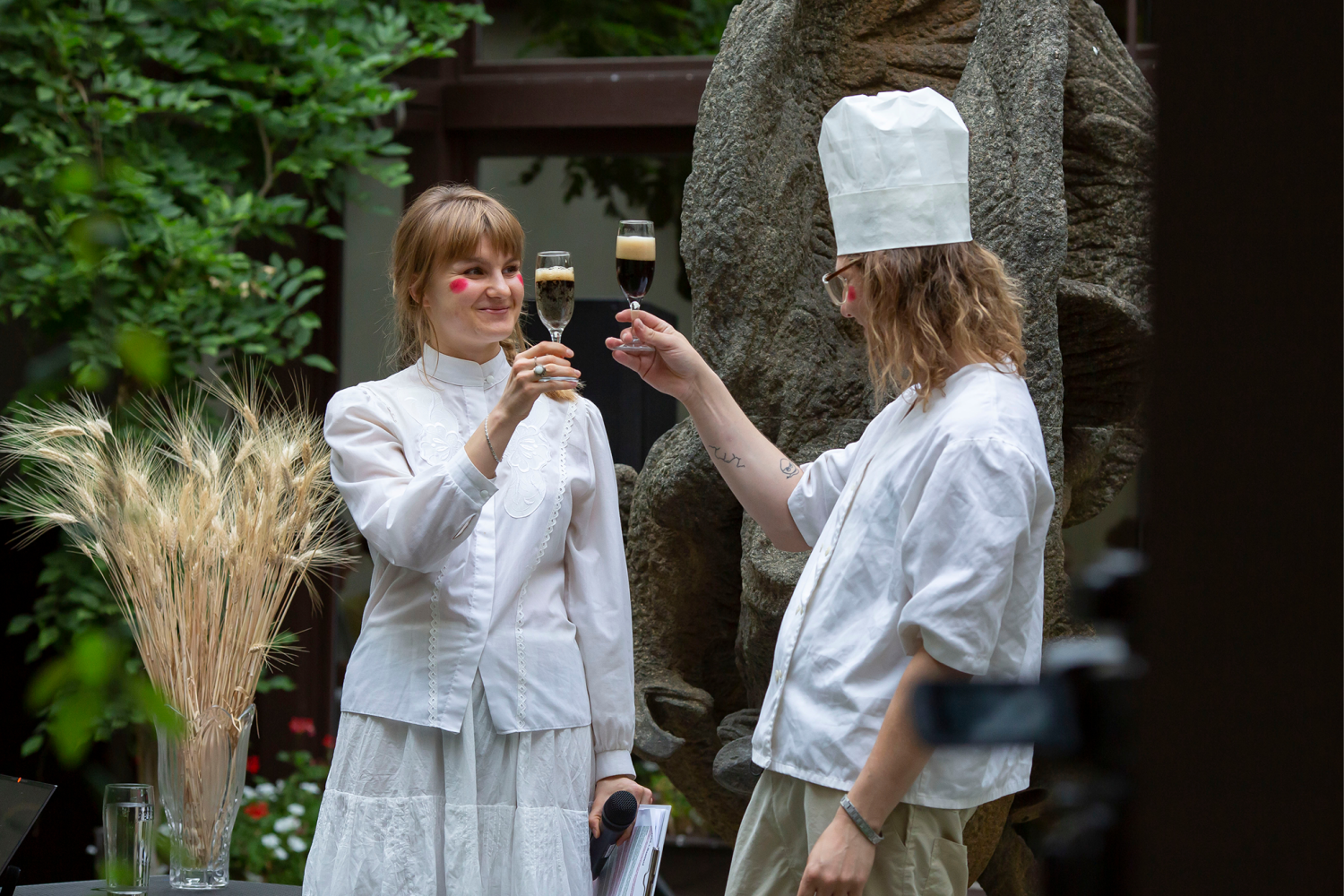
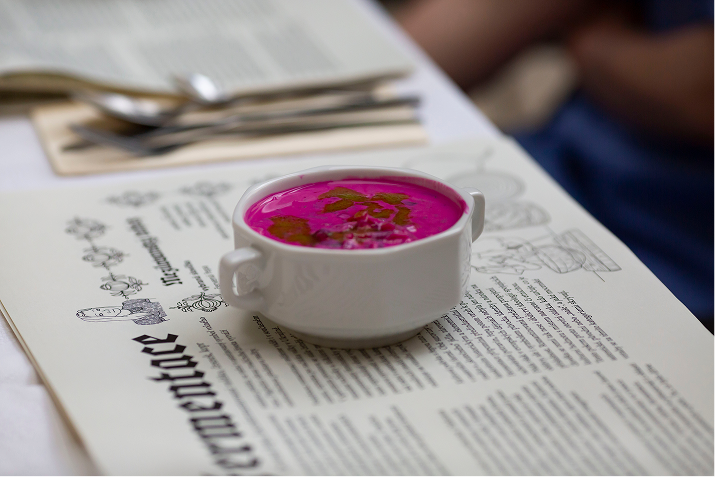
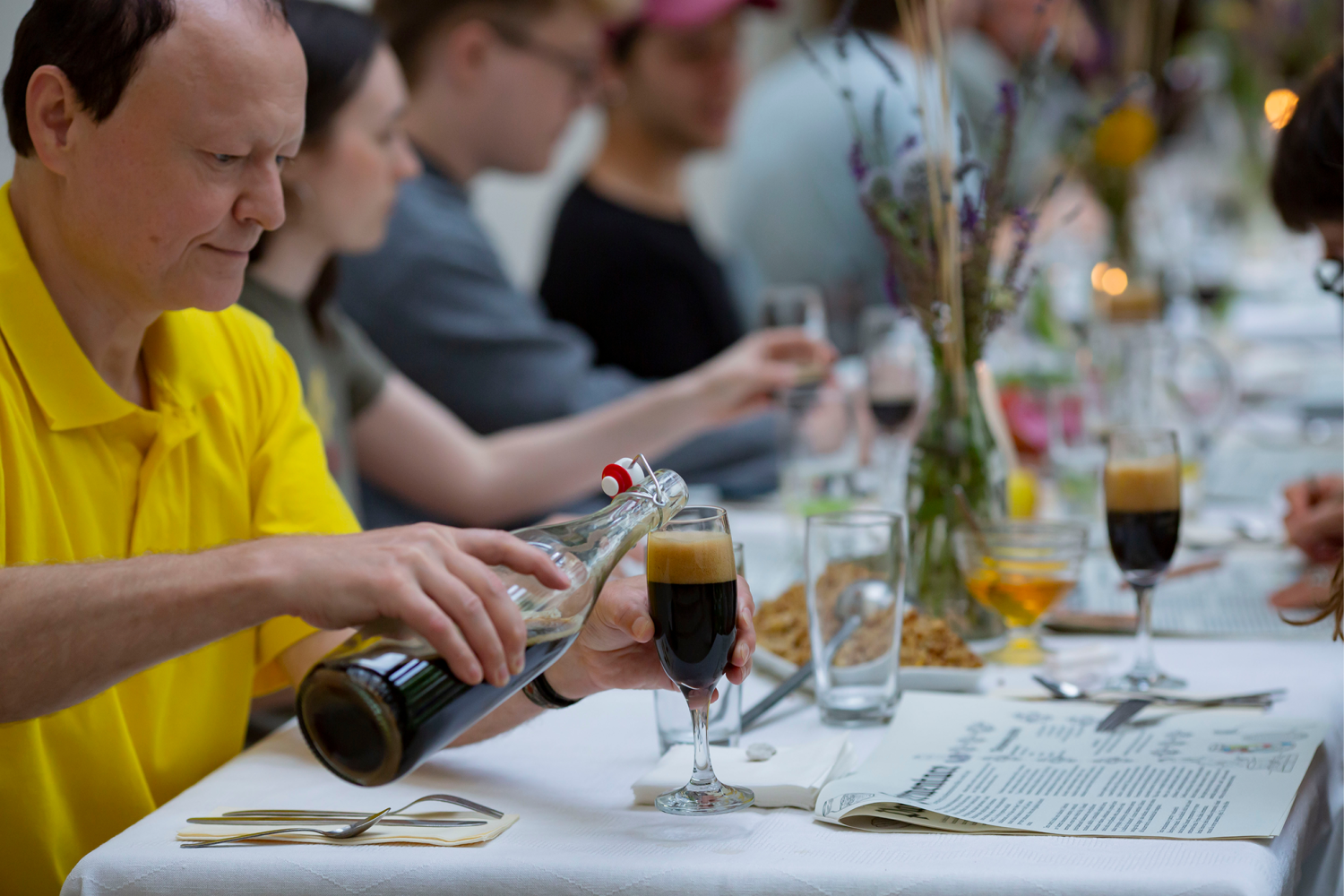
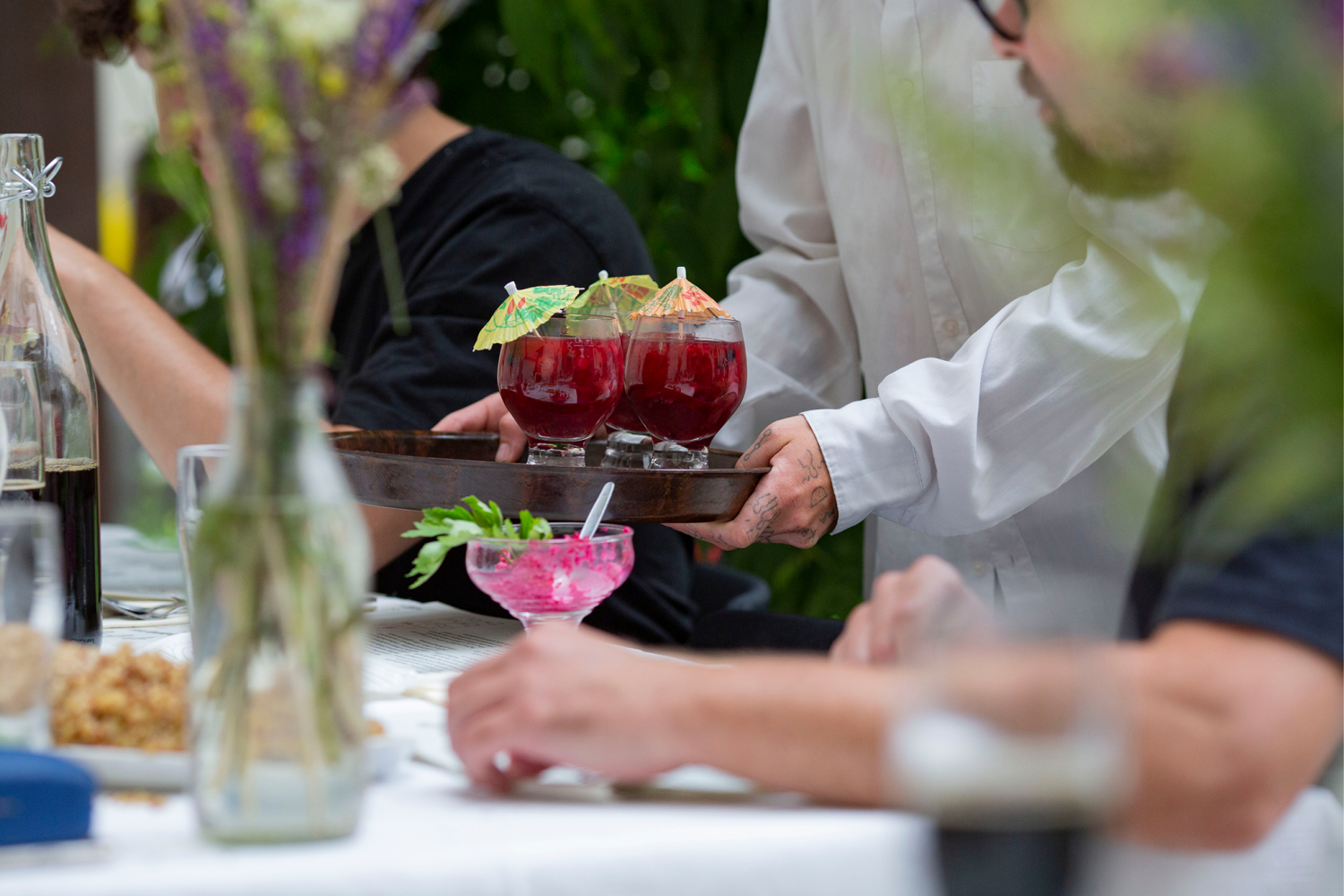
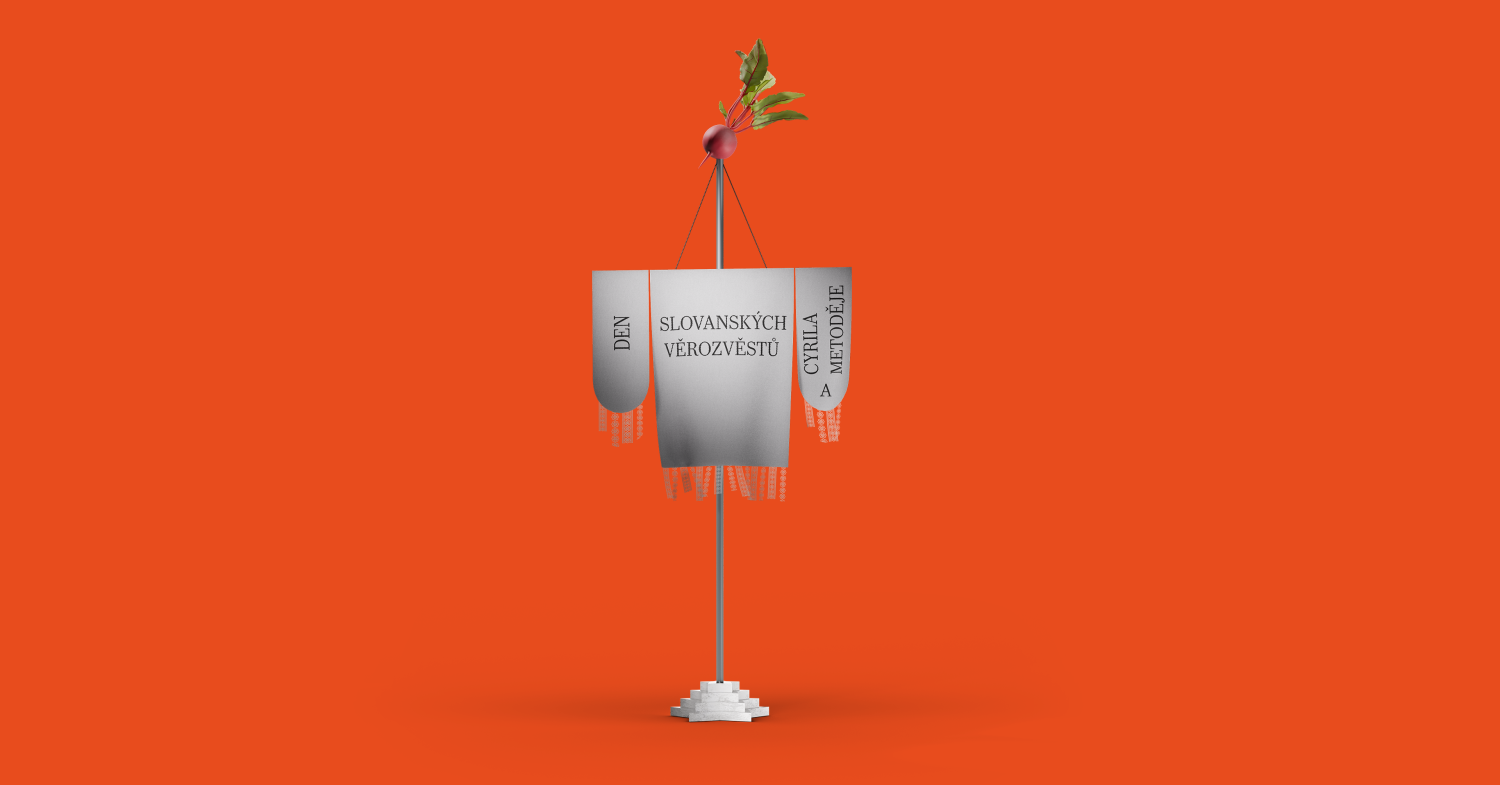
The fifth edition of the year-round series Státky is helmed by the artistic duo Zuzana-Markéta Macková and Tomek Pawłowski-Jarmołajew. They have decided to conceive the Feast of Saints Cyril and Methodius (the Slavic missionaries) as a performative dinner. Come sit with us at the table and let us guide you through a tasting of the cultural connotations of Slavic identity in today's Europe. A five-course menu inspired by traditional Slavic recipes will be served from 17:00 at the Klub zastupitelů in Brno.
One Europe (Not Three)
What does it mean to be Slavic within a European community that, after nearly forty years, remains culturally and economically divided by the shadow of the Iron Curtain? How are Slavs expected to contribute to shaping the European community while being perceived as "internal others"—"white, but not quite"—and while their cultural heritage is co-opted and hollowed out by the West, and colonized by the East for the purposes of cultural and geopolitical wars?
"Tomek and I met as part of an artistic study program that takes place across various Western European countries. In this environment, an informal Eastern European diaspora repeatedly forms across cohorts. It doesn't emerge from a shared cultural identity, but rather from shared conditions of mobility and a sense of inequality.
For me, this experience opened up the question of Slavicism not as a historical or linguistic category, but as an image that emerges the moment Eastern Europe is read through a Western institutional perspective. This image shifts depending on the context; sometimes it links to folklore, other times to post-socialist aesthetics, or to a notion of rawness and authenticity that is simultaneously attractive and distanced. Since the start of the war in Ukraine, these motifs have intensified further in visual culture. They disconnect from the specific historical and political situations they stem from and circulate across art and internet culture as an aesthetic language. Here, Slavic motifs function as signs of authenticity in global cultural circulation, where Slavicism becomes a commodified image, gaining value through its alleged 'originality,' rawness, and distance from Western modernity," explains Zuzana-Markéta Macková, drawing on her own experiences as a Czech living in the West, which served as the impulse for creating this project.
Language as a Political Tool
Instead of the dominant English, the Czech-Polish artistic duo chose Interslavic as the primary language of their performance—a constructed language created by combining the vocabulary and grammar of all Slavic languages so that it is intelligible to native speakers of any of them. However, much like the Old Church Slavonic of Cyril and Methodius, Interslavic does not emerge in a political vacuum. Although originally a purely linguistic project, it cannot be presented as apolitical. Given its effort to unite Slavic nations into a broader, unified community, it will always foster a breeding ground for pan-Slavic, and therefore anti-Western, sentiment. This inadvertently plays into the hands of Russia, which seeks to herd Slavic nations back under its dominion and strip them of the influence of the "rotten West," all while relentlessly murdering its "Slavic brothers and sisters" in Ukraine. Is it even appropriate to seek a path to Slavic fellowship in today's Europe? And if so, is it possible to fulfill its decolonial potential, or is it doomed to counterproductive tribalism? Come search for—and taste—possible answers on the Day of the Slavic Missionaries at the Klub zastupitelů in Brno.
Authors
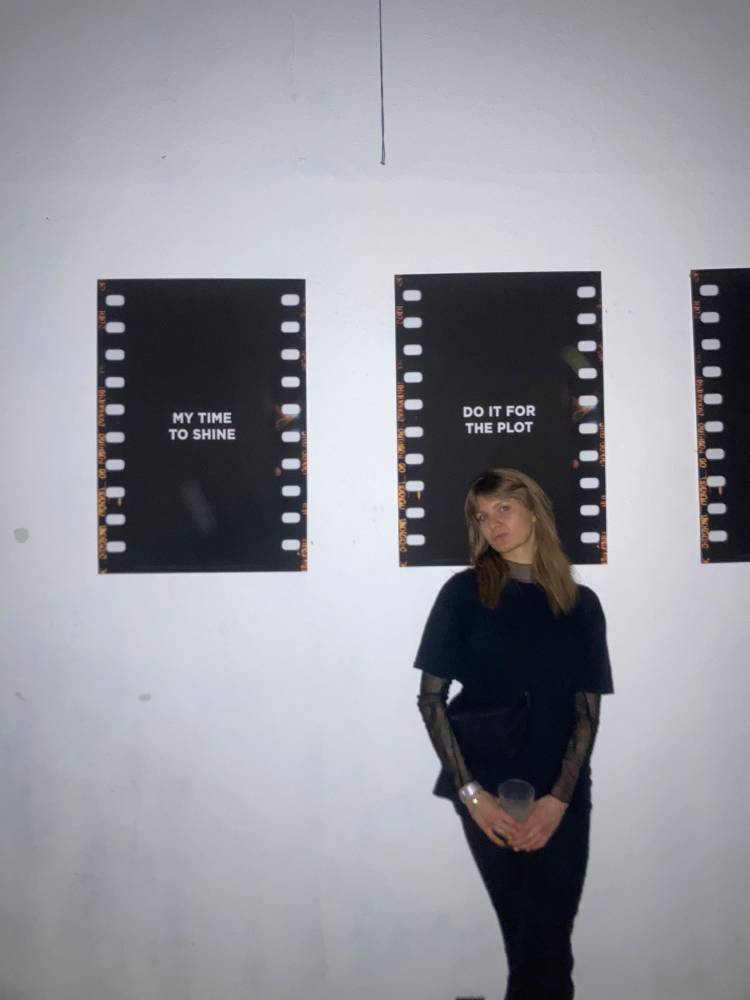
Zuzana-Markéta Macková
A Czech artist and curator working with the moving image. She is interested in themes such as speculative fiction, hypercapitalism, the relationship between East and West, and conspiracy theories. She often utilizes audience manipulation strategies, humor, pop-cultural references, and the principles of metamodernity.
Tomek Pawłowski-Jarmołajew
A Curator and a cook. They operate in Ustka, working at the Baltic Gallery of Contemporary Art as the curator of the artist-in-residence program. They co-founded the Społem fest collective, which organizes exhibitions and art events in community clubs across various urban neighborhoods.