It is May 11, 1946. Backstage at Milan’s La Scala, Arturo Toscanini—one of the most famous conductors of his time—waits for the stage manager's signal announcing the start of the concert. It is no ordinary evening. The world-renowned opera house is opening its doors to the public for the first time since Allied bombings reduced the theatre and the entire city to a heap of rubble. At nine o'clock, the stage manager enters: "Maestro, we are ready. Into the wolf’s mouth (In bocca al lupo)," opening the door for the conductor. "May the wolf die! (Crepi il lupo!)" Toscanini replies. In Brno, the stage manager would likely utter the Czech phrase "Break a leg" (Zlom vaz), to which the reply would be "To hell with you" (Čert tě vem). Yet the principle remains the same: a traditional theatrical incantation wishing good luck before a performance. Superstition invokes disaster in order to ultimately ward it off.
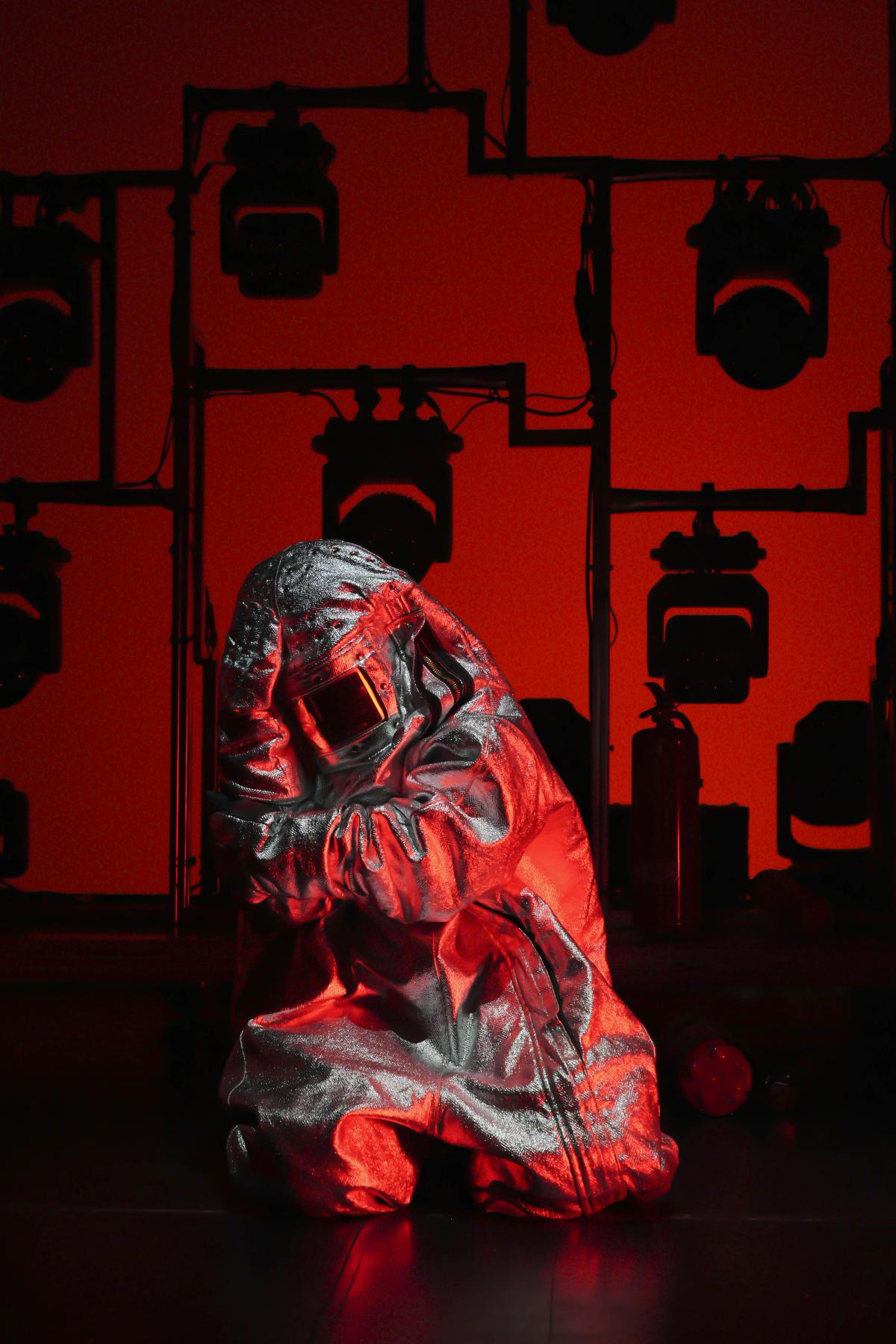
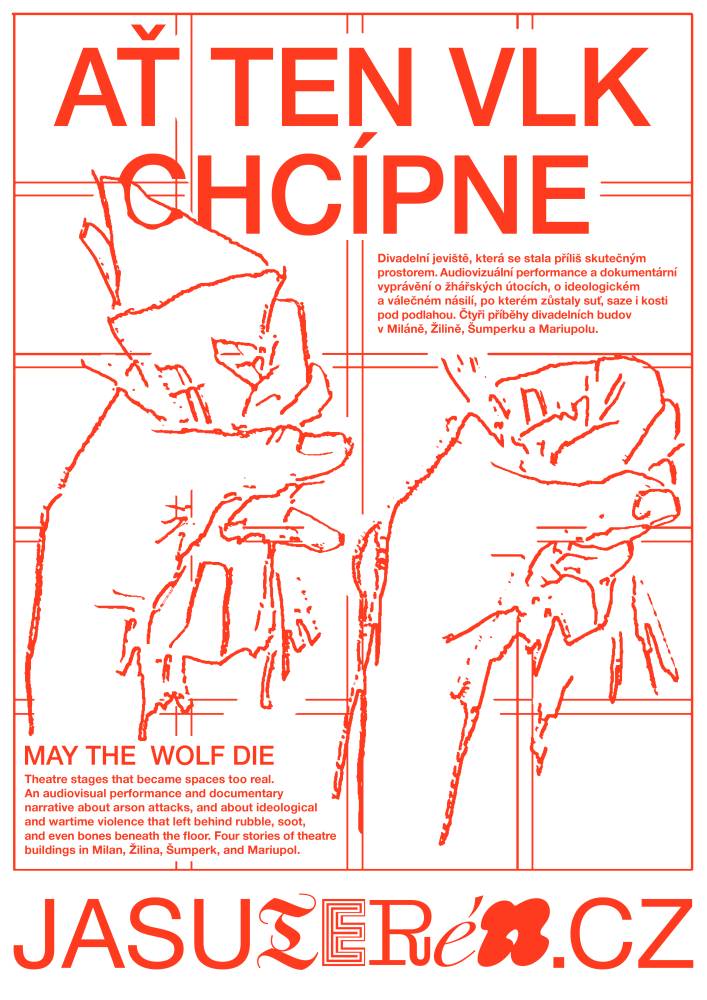
Theatres are haunted by catastrophes far beyond artistic fiascos. Bombs fall onto their roofs, and flames consume their stages. These real-life stories are the subject of a new original work by Terén’s internal team and guest artists. The production May the Wolf Die (Ať ten vlk chcípne) reconstructs the destruction of four European theatre buildings and, above all, the processes of their restoration—processes that became intertwined with shifting social orders and state regimes. It is a documentary narrative of the varied fates of theatres: a return to the original state, total destruction, major reconstruction, and the theft of an entire building by an occupying army.
Historical and contemporary events come alive in the performance through the testimony of direct participants and expert perspectives. Members of the Donetsk Regional Drama Theatre ensemble from Mariupol, currently operating in exile in Uzhhorod, report on one of the most shocking war crimes of the Russian aggression in Ukraine. During the Battle of Mariupol, the theatre building—which was serving as a shelter for a thousand people—was bombed. Hundreds of innocent victims perished in its ruins. The occupying administration subsequently reconstructed the building and resumed artistic operations there in December 2025. Slovak dancer and performer Tomáš Janypka returns to the 2019 arson attack on the S2 theatre hall at the Stanica Žilina-Záriečie cultural centre, an attack linked to the flying of a rainbow flag. Architect, theatre firefighter, and detective writer Martin Švec traces the circumstances surrounding another arson attack—on the Šumperk Theatre in 1994—which remains completely unsolved to this day. The fourth narrator is Italian musician and musicologist Elia Moretti, who, against the backdrop of the bombing of Milan during World War II, recounts conductor Toscanini’s anti-fascist resistance and contextualizes it within contemporary pro-Palestinian protests connected to the La Scala building.
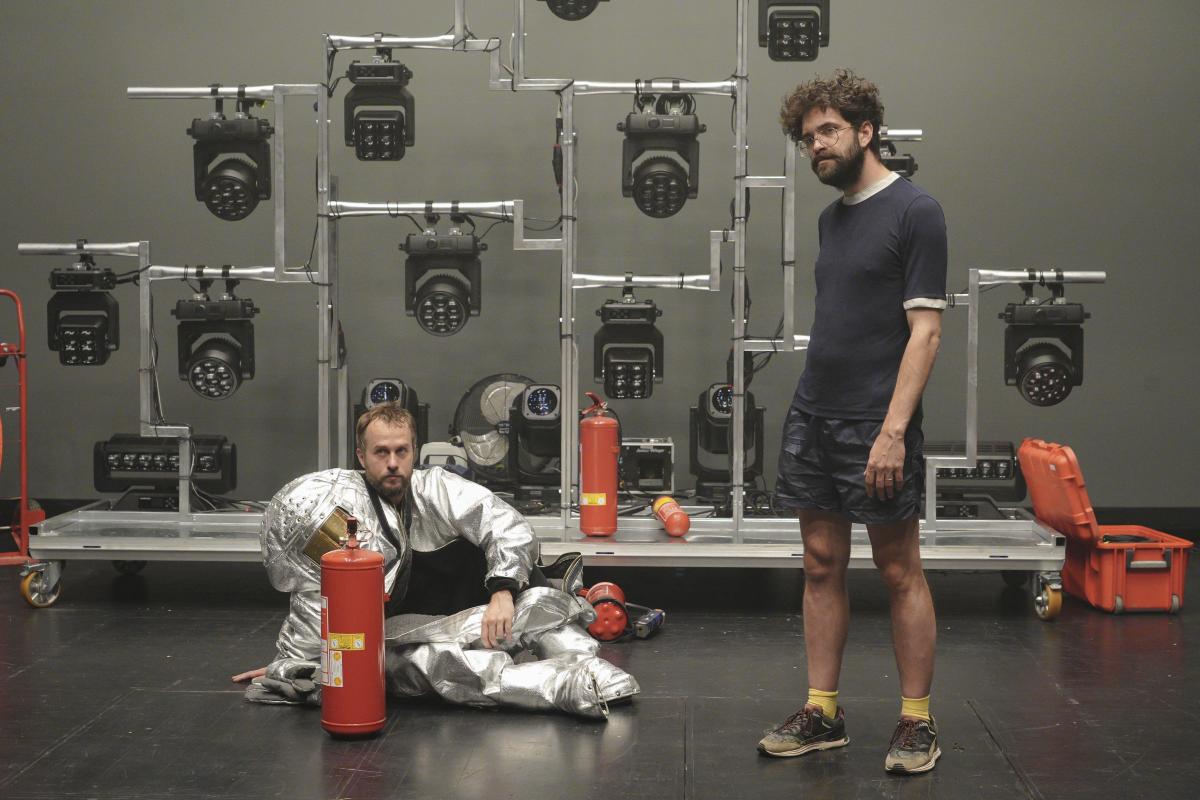
The performance May the Wolf Die is a four-hour event divided into four chapters separated by intermissions. It combines audiovisual performance, documentary storytelling, audio drama (Hörspiel), concert, and lecture performance. It tells both the grand and small histories that passed through theatre buildings and portrays concrete human decisions in moments of crisis. Within the cycle of building, demolishing, creating, and destroying, questions arise: how do we deal with the rubble and ruins of the past, and how do we repair our bombed and burned-out present for the future?