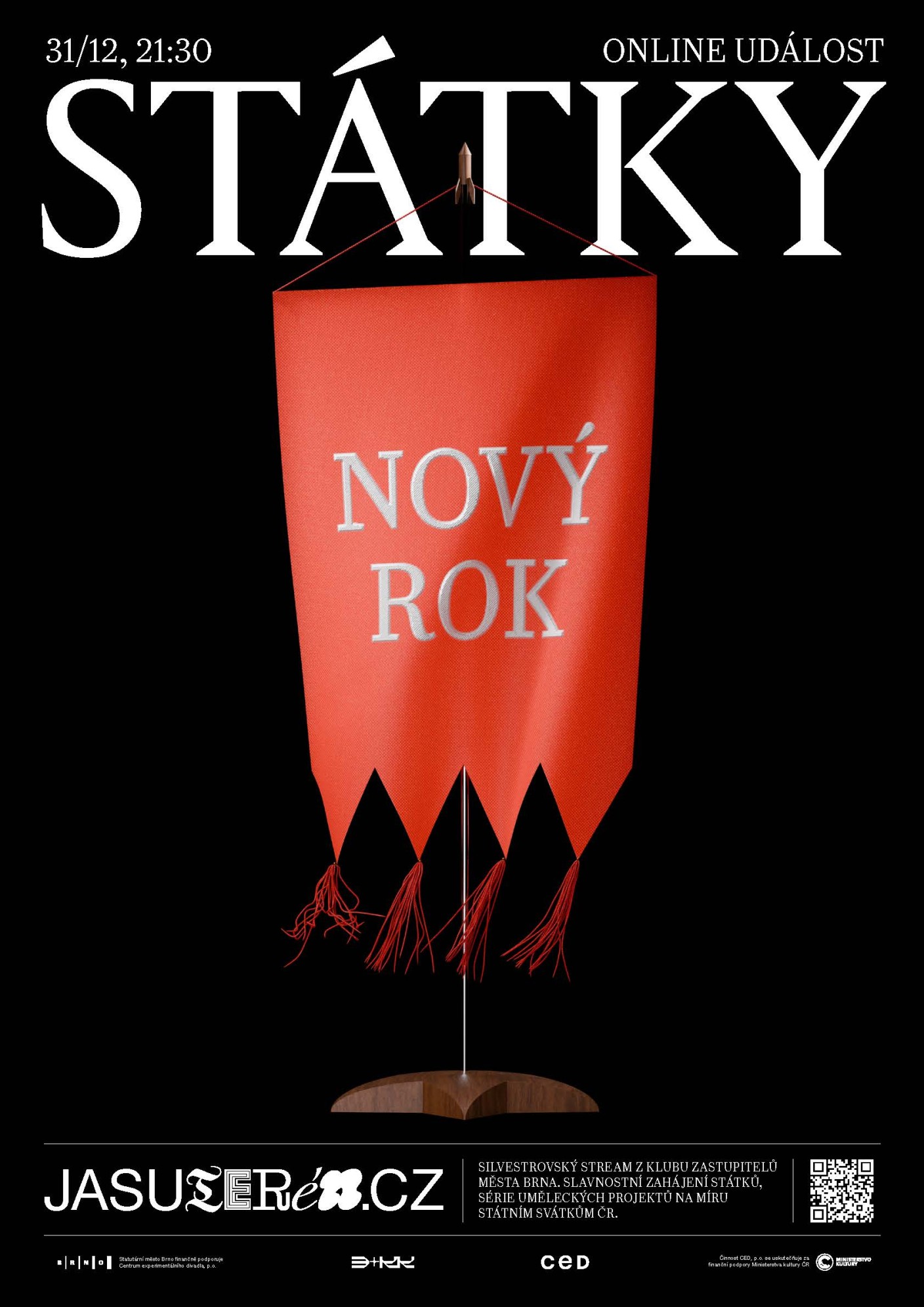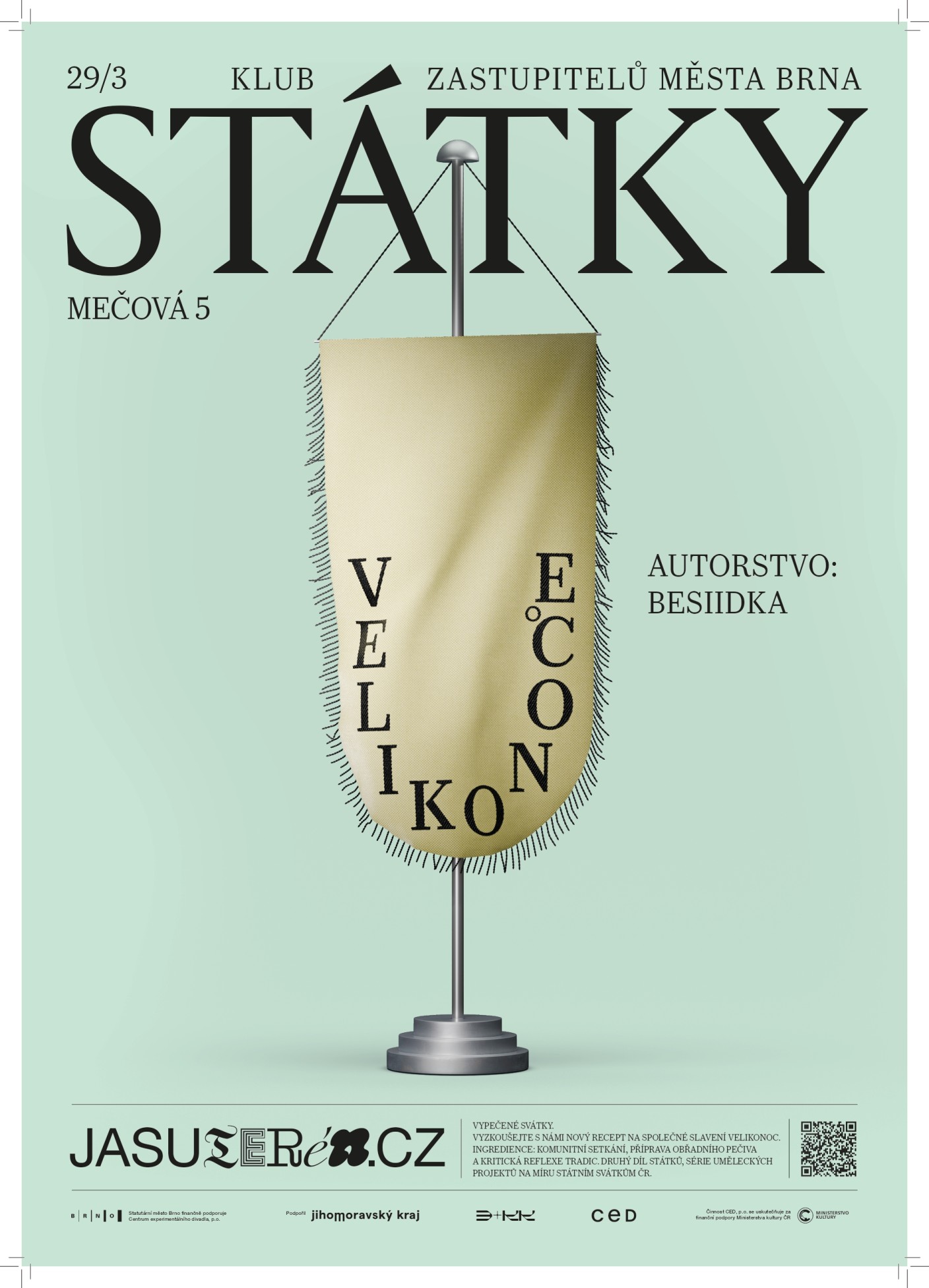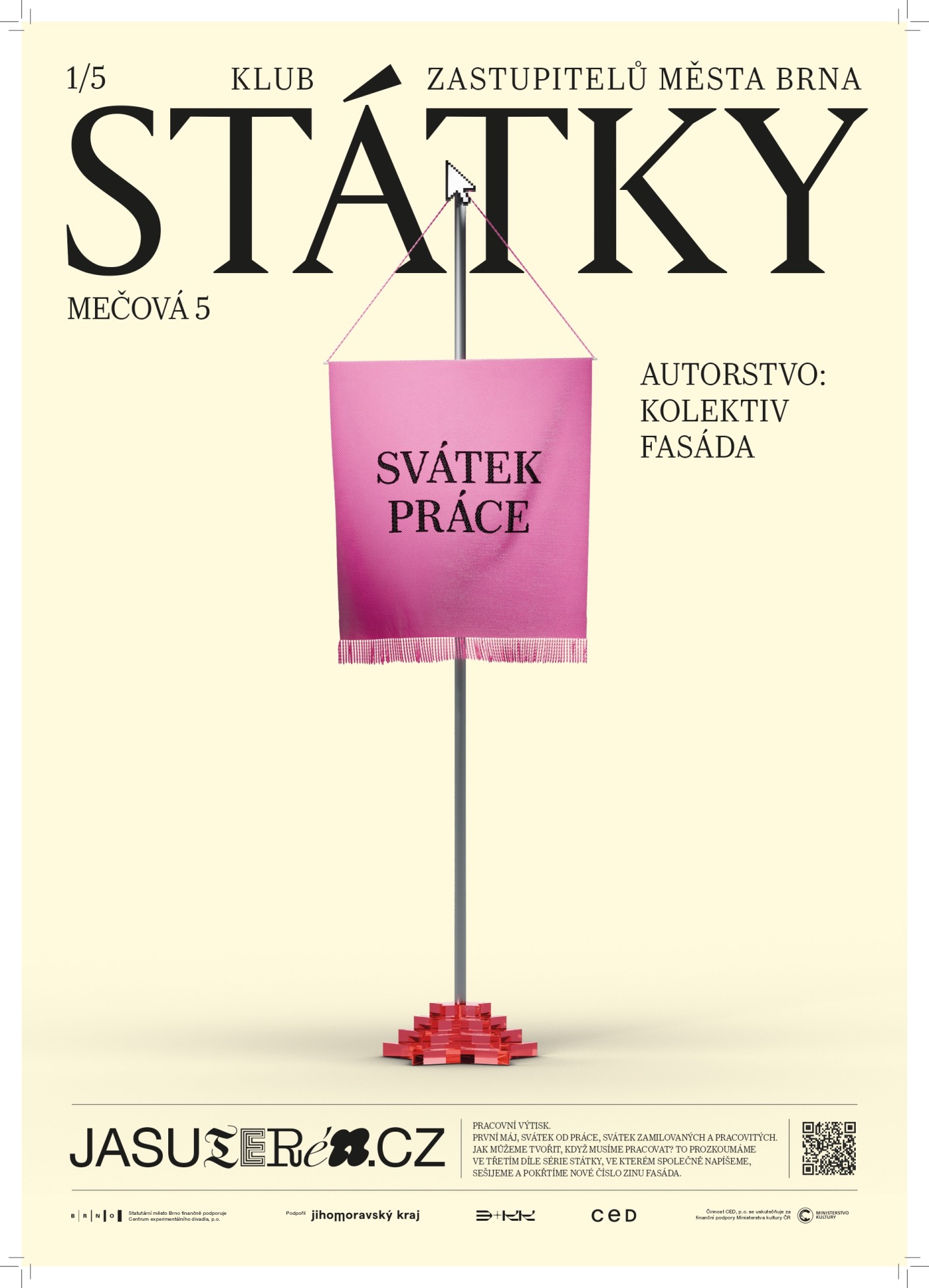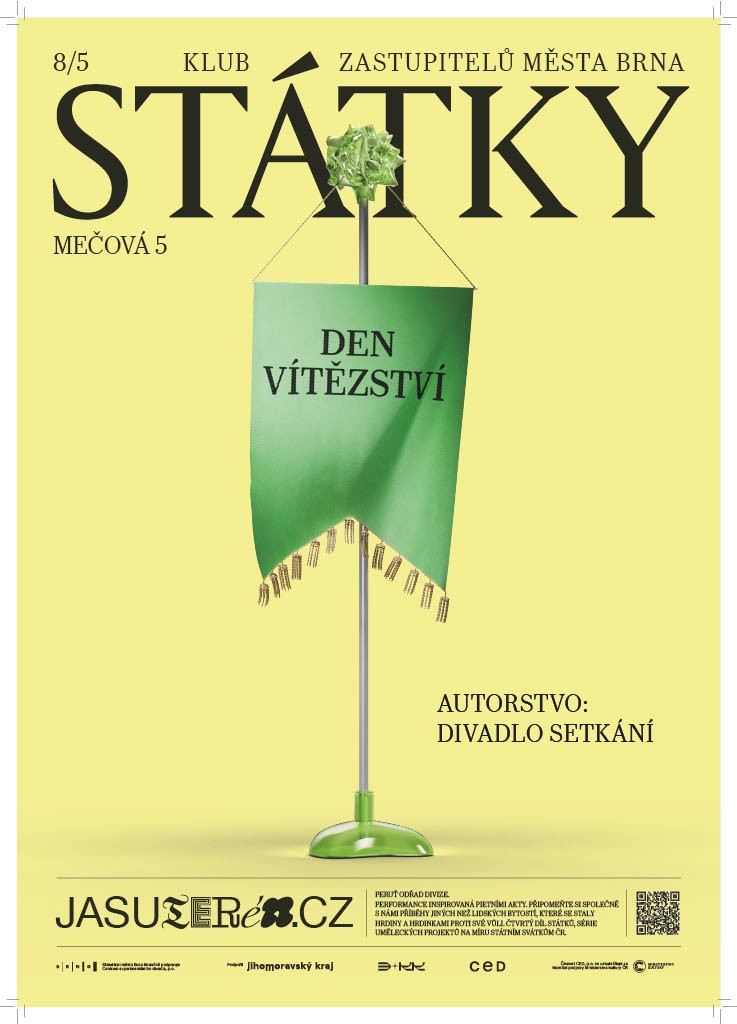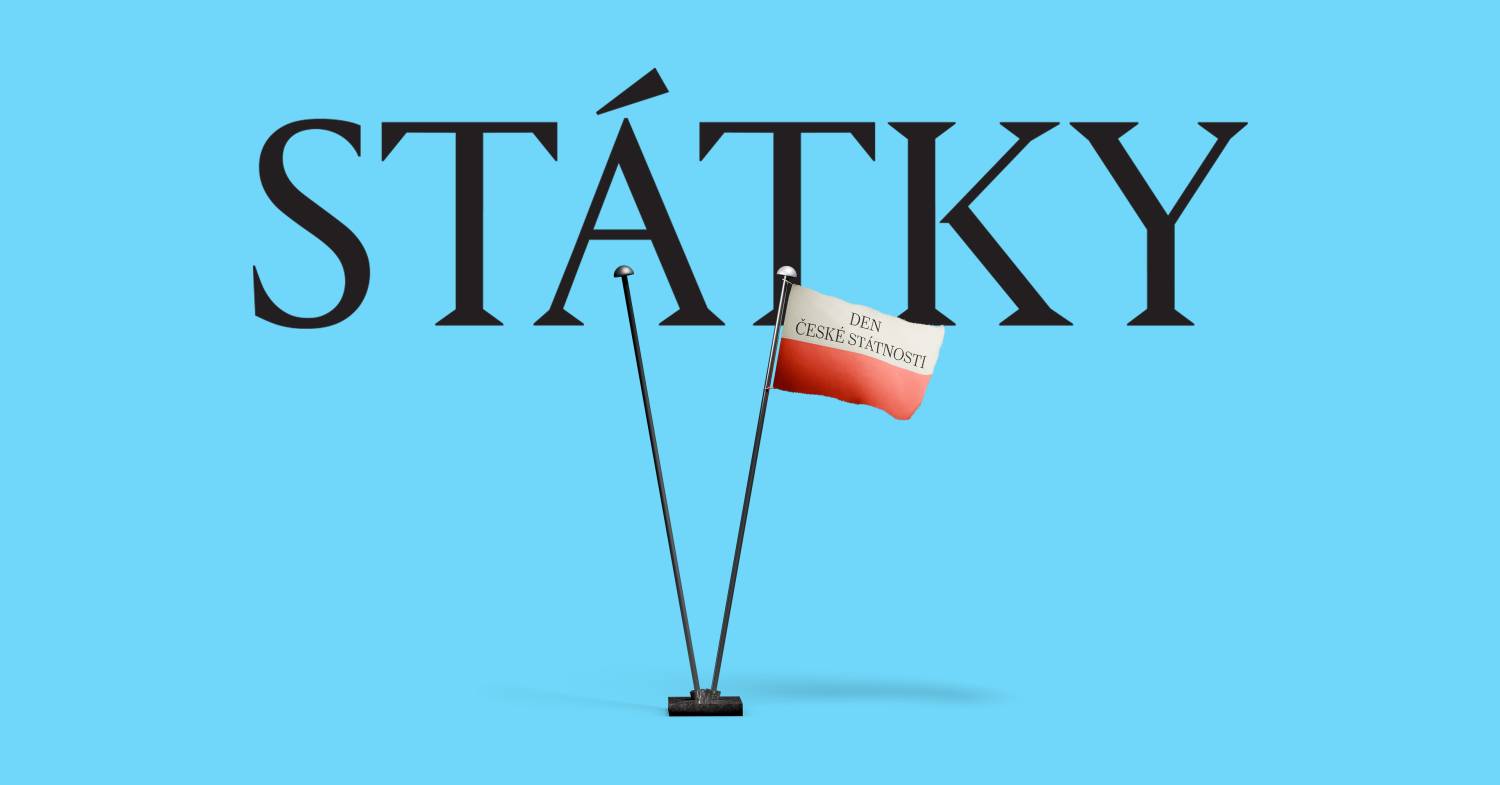
TO CELEBRATE THE STATE
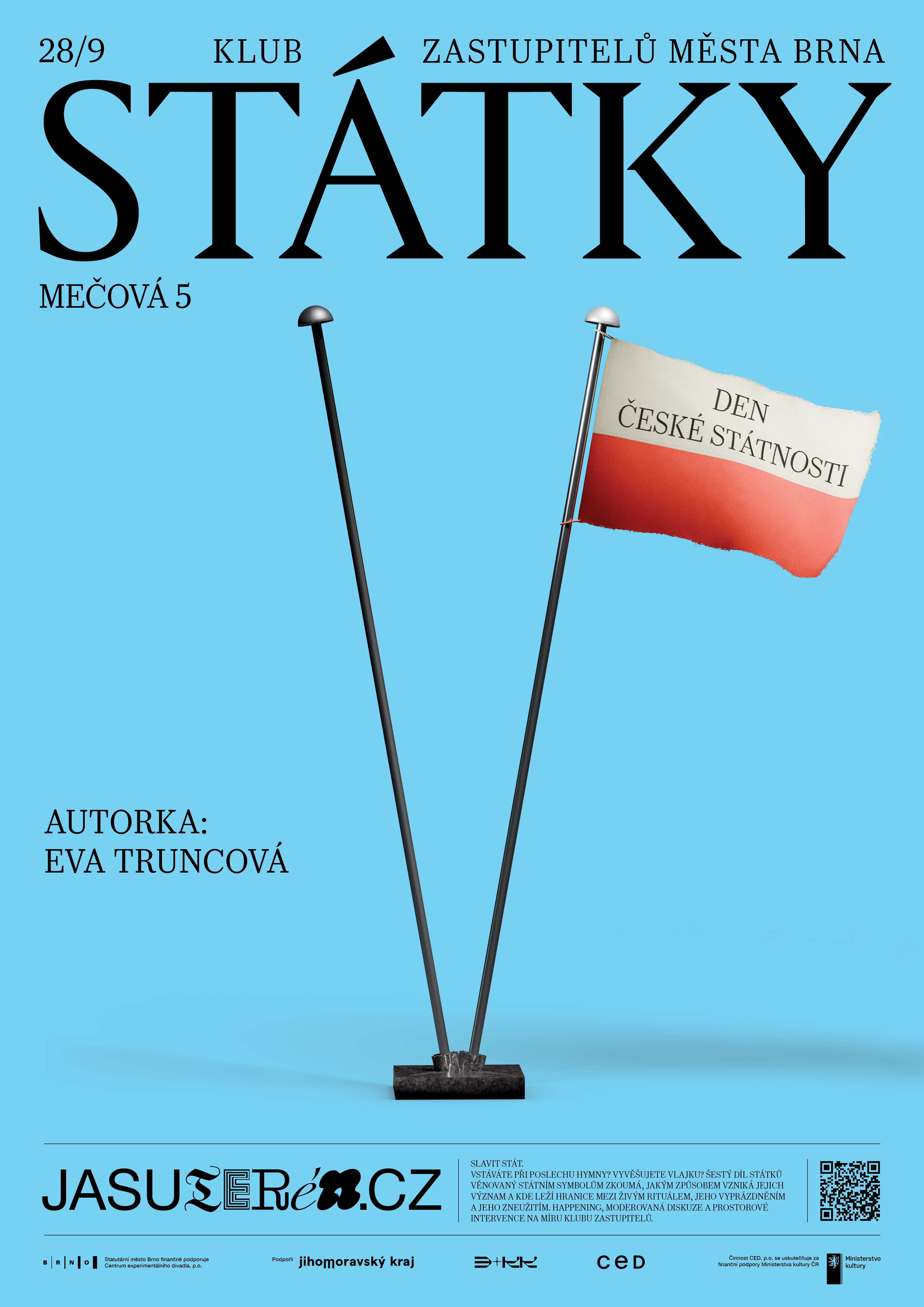
Together with architect and curator Eva Truncová, we launch the autumn block of the year-long series STÁTKY with an event dedicated to state symbols, collective memory, and civic rituals. The curated program of the series' sixth instalment combines a happening, a moderated discussion, and site-specific spatial interventions tailored for the Klub zastupitelů (City Councillors' Club).
DO YOU STAND UP WHEN THE NATIONAL ANTHEM PLAYS? DO YOU FLY THE FLAG?
What motivates us to celebrate national holidays and abide by the rules associated with state symbols? Do we act out of a sense of pride, belonging, and respect for the past, or are we simply repeating a learned social choreography? Are we acting at all?
Directed by Eva Truncová and tied to the September holiday of St. Wenceslas Day (Czech Statehood Day), the event turns its attention toward state symbols. The author interprets them as mutable cultural constructs whose meaning is formed and maintained through repeated gestures, rules, and spatial relationships: "State symbols are signs whose meaning arises from cultural consensus. To understand them, we must know this consensus and repeatedly reaffirm it. A flag, a coat of arms, or an anthem does not function solely through its visual or acoustic form. Its meaning is also created by the actions that accompany it: raising and lowering flags and banners, laying flowers and wreaths, standing up and sitting down, singing, remaining silent, or focusing one's gaze in a single direction. The exact same gestures, marches, and gatherings can serve democratic, emancipatory, or extreme nationalist purposes. A performative situation perceived in one context as a dignified ceremony can acquire an entirely different meaning through a simple shift of location, actors, or political framework. Therefore, the boundary between legitimate use, appropriation, protest, and desecration of a symbol is far from obvious—it is constantly being negotiated."
HOW IS THE MEANING OF A SYMBOL CREATED?
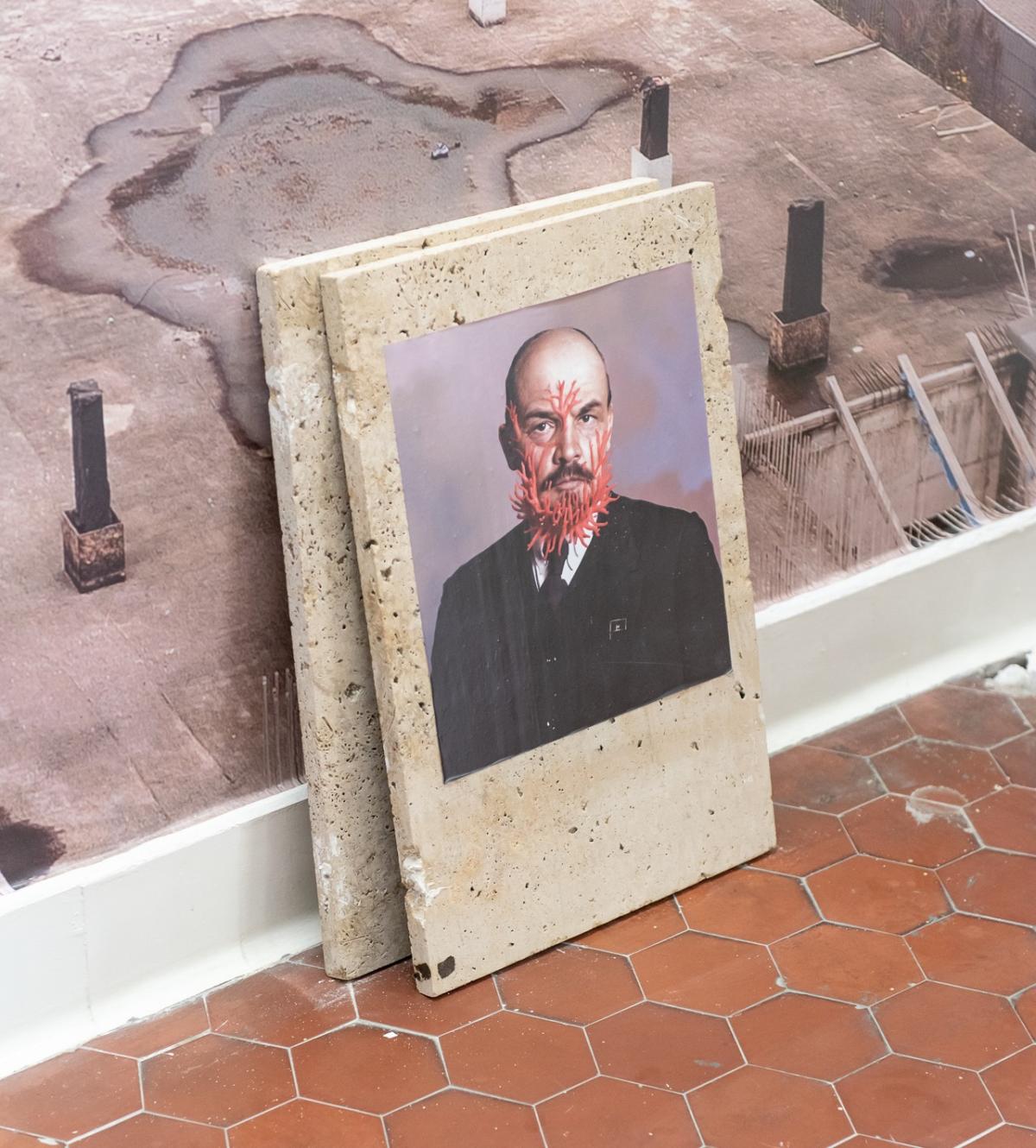
The Klub zastupitelů, located within the complex of Brno's Old Town Hall, is a space tied to political representation, institutional protocol, and decision-making. The spatial interventions designed by Eva Truncová specifically for this venue explore how displacement, absence, or a change of context affect the meaning of a state symbol and our behavior toward it. What treatment of a symbol do we still consider legitimate, and what do we perceive as crossing the line of dignity?
The sixth instalment of Státky also responds to the instrumentalization of state symbols by political power, which can reduce their meaning to support specific ideological narratives. It demonstrates how such approaches can reinforce exclusive notions of who is and who is not part of the represented community. Can a new reading of symbols be used to search for contemporary forms of collective identity in a democratic society? Where lies the boundary between a living ritual, its emptying out, and its abuse? Is it possible to feel a sense of belonging without having to feign total unity?
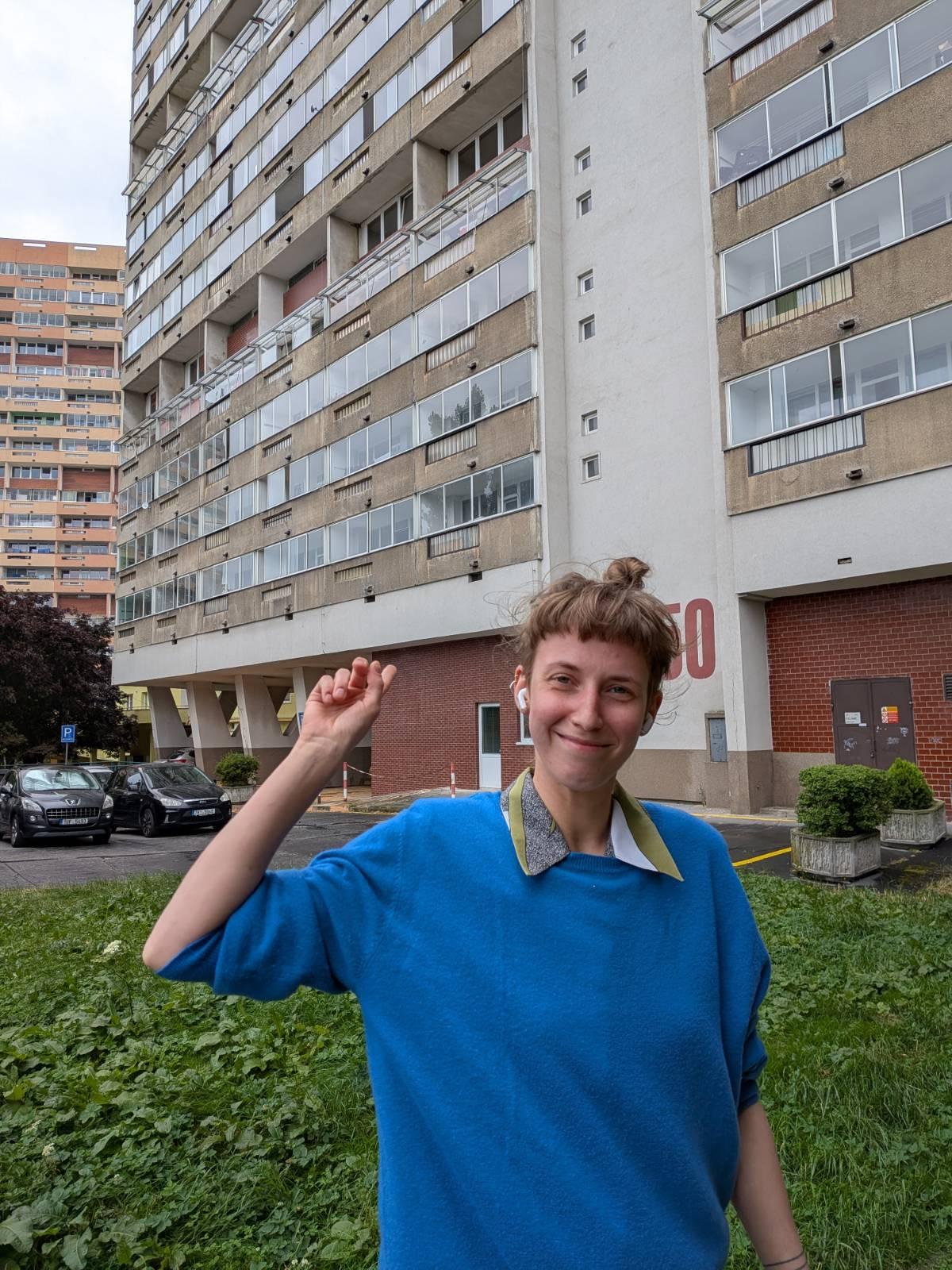
EVA TRUNCOVÁ
As an architect and curator, Eva Truncová explores and tests the limits of the field, primarily through published writing, as well as authorial, exhibition, and other cultural projects in which she collaborates in various roles. In her doctoral studies at the Faculty of Architecture in Brno, she examines the manifestations of non-democratic regime ideology in architecture, critical interpretation, and alternative readings of the positivist canon of architectural history. With the support of FA BUT, she founded and curates the 45,000 l display-case gallery in a public passage in central Brno, continuously opening up questions surrounding the exhibition and (re)presentation of architecture. Since the summer of 2024, she has been a member of the editorial team at the architectural journal ERA21.